Finding the right health insurance for your family often feels like navigating a maze blindfolded. You want the best possible medical care for your children and spouse, but you also need to protect your household budget from unexpected medical bills. As healthcare costs continue to fluctuate and new policies take effect, choosing the right coverage has never been more critical.
The 2026 healthcare landscape brings a fresh set of challenges and opportunities for families. With expanding digital health tools, changing regional networks, and updated subsidy structures, the options are vastly different from just a few years ago. Securing comprehensive family health coverage ensures that routine check-ups, sudden emergencies, and ongoing treatments are handled without financial panic.
This guide explores the best health insurance plans in the USA for families in 2026. We will walk through how to evaluate your family’s unique medical needs, review the top insurance providers on the market, and share practical strategies to lower your healthcare costs.
Understanding Your Family’s Healthcare Needs
Before you start comparing premiums and provider networks, you need a clear picture of what your family actually requires from a health plan. Every household is different, and a plan that works perfectly for your neighbor might be a terrible fit for you.
Assessing Size, Age, and Specific Health Requirements
Start by taking an inventory of your family’s anticipated medical needs for the upcoming year. A young couple planning to have a baby will need robust maternity and pediatric coverage. Alternatively, a family with teenagers might prioritize sports injury coverage and mental health services. If someone in your household manages a chronic condition like asthma or diabetes, access to specific specialists and predictable prescription costs will be your top priority.
Differentiating Between HMO, PPO, EPO, and POS Plans
Health insurance plans are categorized by how their medical networks operate. Understanding these acronyms will save you major headaches down the road:
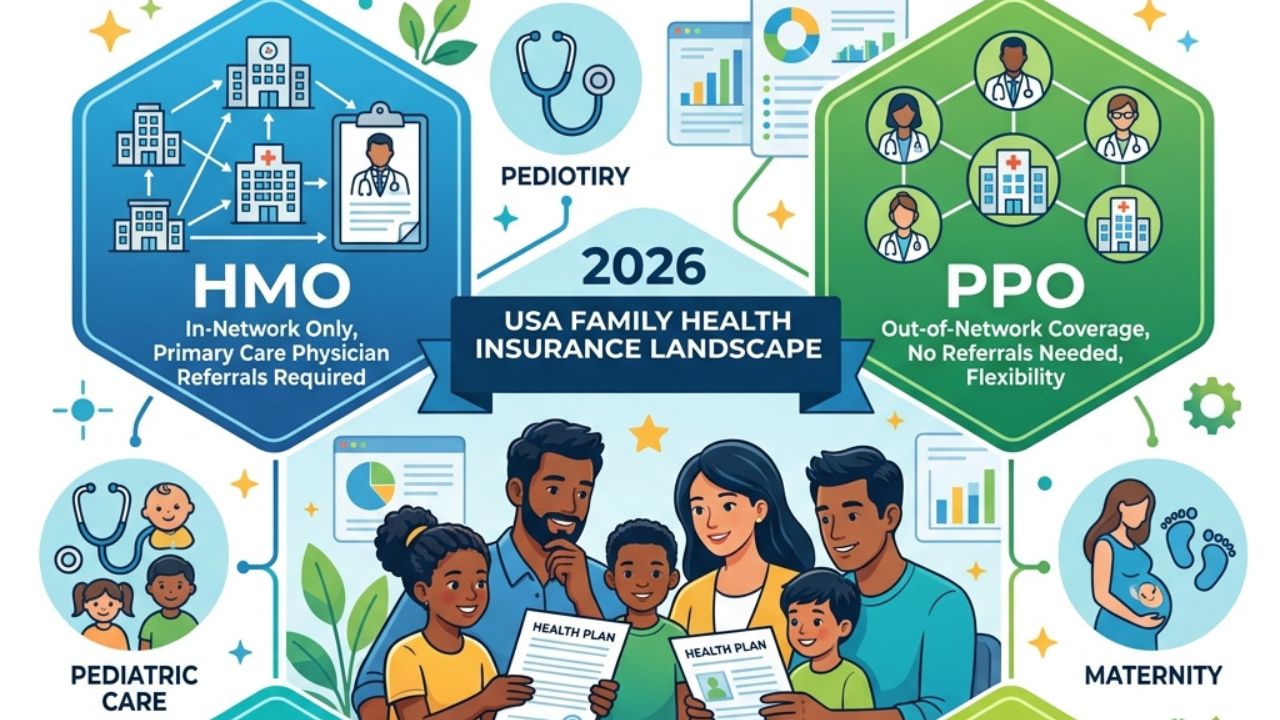
- HMO (Health Maintenance Organization): These plans require you to use doctors and hospitals within their network. You usually need a referral from a primary care physician (PCP) to see a specialist. HMOs often have lower premiums but offer less flexibility.
- PPO (Preferred Provider Organization): PPOs offer more freedom. You can see out-of-network providers, though you will pay less if you stay in-network. You also do not need a referral to see a specialist.
- EPO (Exclusive Provider Organization): A hybrid model where you do not need a primary care referral for specialists, but you must stay strictly in-network for your care to be covered (except in emergencies).
- POS (Point of Service): Similar to an HMO, you need a primary care doctor to coordinate your care, but you can go out-of-network for a higher fee.
Deductibles, Copayments, and Out-of-Pocket Maximums
Your monthly premium is only one part of the cost equation. You must also consider your deductible (the amount you pay before insurance kicks in), your copayments (flat fees for specific services), and your out-of-pocket maximum. Families with high anticipated medical needs often benefit from paying a higher monthly premium in exchange for a lower deductible and out-of-pocket maximum.
Top Health Insurance Providers for Families in 2026
While local regional plans can be excellent, several major national providers consistently rank at the top for family coverage. Here is a look at the leading health insurance providers in 2026.
Blue Cross Blue Shield (BCBS)
Blue Cross Blue Shield remains a powerhouse in the health insurance market. BCBS is highly regarded for its massive network of doctors and hospitals across the country.
- Pros: Exceptional nationwide coverage, making it ideal for families who travel frequently or have children going to college out of state. They offer a wide variety of plan types.
- Cons: Premiums can be higher than regional competitors, and customer service quality varies significantly by state.
UnitedHealthcare (UHC)
UnitedHealthcare is the largest health insurer in the United States, offering an impressive array of family plans and robust digital tools.
- Pros: Excellent online portals and telehealth options. UHC offers great wellness programs that reward families for healthy habits.
- Cons: Their HMO plans can have strict network limitations, and some members report challenges with claim approvals for complex treatments.
Aetna
Acquired by CVS Health, Aetna has deeply integrated its insurance products with CVS pharmacy locations, creating a highly convenient ecosystem for families.
- Pros: Walk-in clinic access at MinuteClinic locations is incredibly convenient for families with young children. They offer strong prescription drug benefits.
- Cons: Their network size is smaller than UHC or BCBS in certain rural areas.
Kaiser Permanente
Kaiser operates uniquely as both the insurer and the healthcare provider. You go to Kaiser facilities and see Kaiser doctors.
- Pros: Seamless coordination of care. All your records, doctors, and pharmacies are connected. They consistently score highest in customer satisfaction and preventative care.
- Cons: You must live in a Kaiser service area, and you cannot go outside their network for care.
Key Features to Look for in a Family Health Plan
When reviewing the fine print of a family health insurance plan, pay close attention to the specific benefits that will impact your daily life.
Pediatric Care, Maternity, and Pre-Existing Conditions
Under current federal law, all marketplace plans must cover essential health benefits, including maternity care and pediatric services, and they cannot deny you for pre-existing conditions. However, the quality of this coverage varies. Check if your preferred pediatrician is in-network and review the out-of-pocket costs associated with hospital labor and delivery.
Prescription Drug Benefits and Formularies
Every insurance company has a “formulary,” which is a list of covered prescription drugs categorized into different cost tiers. If a family member takes a specific daily medication, verify exactly how that drug is classified on the plan’s formulary before signing up.
Mental Health Services and Wellness Programs
Mental health is a crucial component of overall family well-being. Look for plans that offer robust behavioral health networks and low copays for therapy sessions. Many top insurers now include free access to mental health apps and wellness coaching.
Telemedicine and Digital Health Offerings
Virtual care has become a staple of modern healthcare. The best family plans in 2026 offer zero-dollar copays for 24/7 telehealth visits. This feature is invaluable when a child wakes up with a fever in the middle of the night.
Navigating Open Enrollment and Special Enrollment Periods
Timing is everything when buying family health insurance. Missing a deadline can leave you uninsured for a full calendar year.
Key Dates for 2026
For most families buying insurance through the Affordable Care Act (ACA) marketplace, Open Enrollment runs from November 1 through January 15. Enrolling by December 15 usually ensures your coverage begins on January 1.
Qualifying Life Events
If you miss Open Enrollment, you can only buy a plan if you qualify for a Special Enrollment Period (SEP). Qualifying life events include losing existing health coverage, getting married or divorced, having or adopting a baby, or moving to a new ZIP code. You typically have 60 days from the event to enroll.
Cost-Saving Strategies for Family Health Insurance
Healthcare is expensive, but strategic planning can keep your family’s finances intact.
Utilizing Subsidies and Tax Credits
Always check if your household income qualifies you for Advance Premium Tax Credits (APTC) through the ACA marketplace. These subsidies act as an immediate discount on your monthly premium and can make higher-tier plans remarkably affordable.
Health Savings Accounts (HSAs) and Flexible Spending Accounts (FSAs)
If you choose a High Deductible Health Plan (HDHP), you can open a Health Savings Account. HSAs allow you to save money on a tax-free basis to pay for medical expenses. The funds roll over year to year, making it a powerful financial tool. FSAs function similarly but are usually tied to an employer and have “use-it-or-lose-it” rules each year.
Comparing Premiums vs. Out-of-Pocket Costs
Do not automatically pick the plan with the lowest monthly premium. If you visit the doctor frequently, a low-premium plan with a high deductible will ultimately cost you more than a high-premium plan with a low deductible. Run the math based on your estimated medical usage.
The Impact of Healthcare Reform on Families in 2026
The healthcare regulatory environment is constantly shifting. Recent legislative updates for 2026 have focused heavily on prescription drug price caps and expanding maternal health resources. State-level initiatives are also increasing protections against surprise medical billing, meaning families are less likely to be hit with massive out-of-network charges after an emergency room visit. Staying informed about your state’s specific healthcare regulations can help you maximize your benefits.
Case Studies: Choosing the Right Plan
Looking at real-life scenarios can make these complex choices easier to understand.
The Young Family
Sarah and Mark just had their first baby. They anticipate frequent visits to the pediatrician for check-ups and vaccines.
- The Best Choice: A Gold-tier PPO plan. While the monthly premium is higher, the low copays for office visits and the flexibility to see pediatric specialists without referrals provide peace of mind and lower out-of-pocket costs throughout the year.
The Family with Chronic Conditions
The Davis family has two teenage children, one of whom requires ongoing treatment and specific brand-name medication for a chronic autoimmune disease.
- The Best Choice: A Platinum or Gold plan heavily focused on the drug formulary. The Davis family scrutinized the formularies of several insurers to find one that placed their child’s medication in a lower-cost tier. They also chose a plan with a low out-of-pocket maximum to protect themselves from high specialty care costs.
Expert Tips and Recommendations
Before you make your final selection, consider these tips from healthcare financial advisors:
- Check the Network Annually: Provider contracts change every year. Your favorite doctor might be in-network in 2025 but out-of-network in 2026. Always verify.
- Don’t Ignore Dental and Vision: Medical plans rarely cover pediatric dental and vision comprehensively. You will likely need to purchase standalone policies for your kids’ braces and glasses.
- Use a Broker: Health insurance brokers are paid by the insurance companies, not by you. Utilizing a licensed local broker can help you navigate confusing plan details at no extra cost to your family.
Securing Your Family’s Health in 2026 and Beyond
Selecting the best health insurance plan for your family requires careful calculation, foresight, and a bit of patience. By thoroughly evaluating your anticipated medical needs, understanding network structures, and taking advantage of available tax subsidies, you can secure coverage that keeps your family physically and financially healthy.
Take the time to compare plans during the Open Enrollment period, consult with a licensed broker if you feel overwhelmed, and always read the fine print regarding prescription formularies and specialist access. Your family’s health is your greatest asset—protect it with a plan that truly serves your needs.