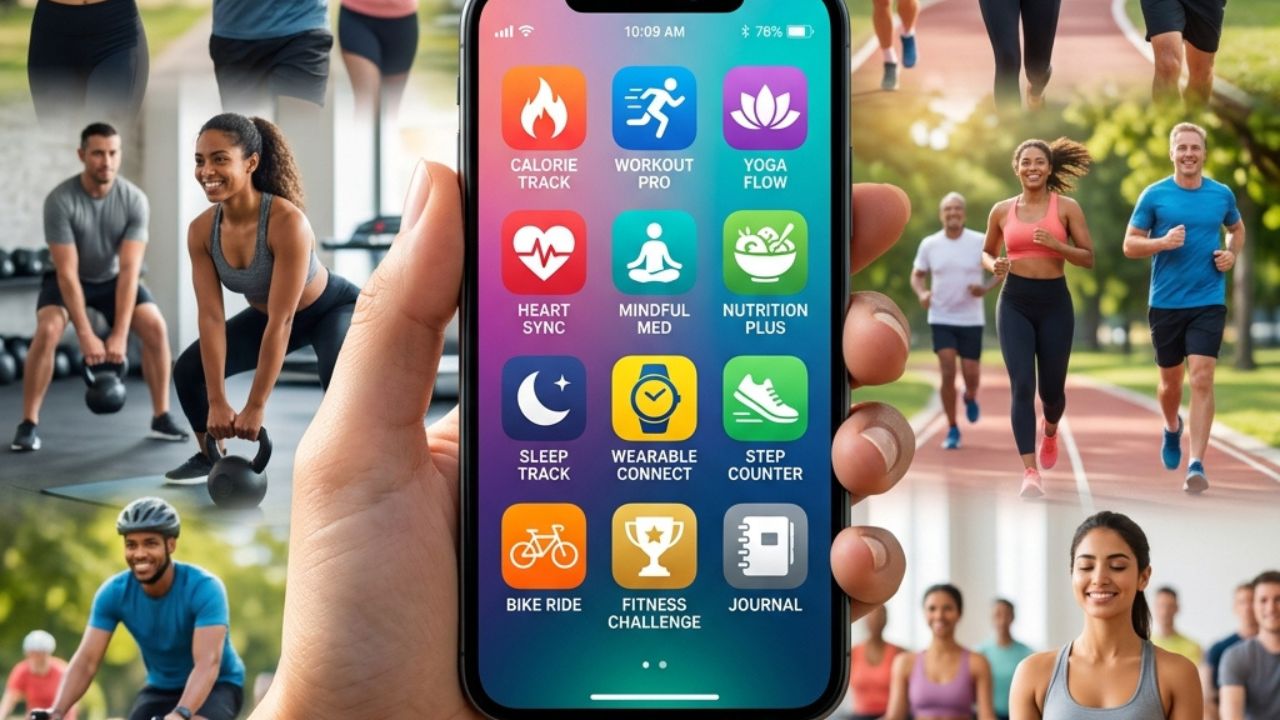
Keeping track of your workouts, meals, and daily steps used to require a dedicated notebook and a lot of patience. Now, a quick glance at your smartphone can tell you exactly how many calories you have burned, how well you slept last night, and when you should schedule your next rest day. The rise of digital health technology has completely transformed how we approach physical wellbeing.
Using health apps for fitness tracking offers a level of accountability that is hard to achieve on your own. When you log your progress, you create a tangible record of your hard work. This visual proof helps maintain motivation during the weeks when hitting the gym feels like a chore. Furthermore, modern tracking apps remove the guesswork from nutrition and exercise. They provide personalized insights based on your specific body metrics, helping you make informed decisions about your daily habits.
But what actually makes a health app truly great? With thousands of options cluttering the app stores, the best tools share a few common traits. They feature intuitive designs that make logging activities quick and painless. They also offer reliable data syncing, ensuring your information stays updated across all your devices. Finally, the top apps provide actionable insights rather than just raw numbers, guiding you toward better health with clear, achievable steps.
Top Picks for Overall Health and Fitness Tracking
If you want a comprehensive view of your wellbeing, you need an app that handles multiple aspects of health simultaneously. These broad-spectrum tools are excellent starting points for anyone looking to improve their daily habits.
MyFitnessPal: Comprehensive calorie and macro tracking
Nutrition plays a massive role in any fitness journey, and MyFitnessPal remains a dominant force in diet tracking. The app boasts a massive database of over 14 million foods, making it incredibly simple to log your meals. You can scan barcodes on packaged foods or search for restaurant meals to quickly calculate your daily intake.
MyFitnessPal goes beyond simple calorie counting. It breaks down your macronutrients—carbohydrates, fats, and proteins—so you can ensure you are fueling your body correctly for your specific goals. The platform also syncs with dozens of other fitness apps and devices, allowing you to seamlessly subtract the calories you burn during exercise from your daily total.
Fitbit App: Seamless integration with wearables and activity tracking
You do not necessarily need a Fitbit device to use the Fitbit app, though pairing the two creates a powerhouse tracking experience. The app excels at monitoring your general daily activity, from the steps you take to the floors you climb.
One of Fitbit’s standout features is its sleep tracking capability. The app analyzes your time spent in light, deep, and REM sleep cycles, providing a nightly sleep score that helps you understand your recovery. The dashboard is clean and user-friendly, presenting your daily metrics in colorful, easy-to-read rings that motivate you to stay moving throughout the day.
Apple Health and Google Fit: Ecosystem-based tracking and data consolidation
Rather than functioning purely as standalone trackers, Apple Health and Google Fit act as central hubs for all your wellness data. These built-in platforms quietly run in the background of your smartphone, counting your steps and estimating your distance traveled using your phone’s internal sensors.
Their true value lies in their ability to pull data from almost every other health app you use. If you track a run in one app, log a meal in another, and record your sleep with a smart ring, Apple Health and Google Fit consolidate all that information. This creates a master dashboard of your entire health profile, securely stored on your device.
Specialized Apps for Niche Fitness Goals
Sometimes a general tracker simply does not offer the depth you need for a specific sport or activity. When you are ready to focus heavily on one type of exercise, these specialized apps provide the targeted tools required for serious progress.
Running and Cycling: Strava and RunKeeper
Runners and cyclists flock to Strava for its incredible route-tracking capabilities and fiercely active community. Strava uses GPS to map your routes, track your pace, and measure your elevation gain. The app’s popular “Segments” feature creates friendly competition by ranking your times against other users who have run or ridden the same exact stretch of road.
RunKeeper offers a slightly different approach, focusing heavily on structured training plans. If you are preparing for your first 5K or aiming for a marathon personal best, RunKeeper provides audio cues during your workouts to coach you through specific pacing and intervals.
Strength Training: Jefit and Strong
Lifting weights requires a completely different tracking method than cardiovascular exercise. Jefit provides an extensive library of exercises complete with animations, ensuring you maintain proper form. You can build custom routines, track your sets and reps, and monitor your one-rep maximums over time.
Strong takes a minimalist approach to strength tracking. The interface is exceptionally clean, focusing purely on getting you into your workout quickly. It remembers your previous lifting sessions, automatically populating your last used weights so you know exactly what numbers you need to beat to achieve progressive overload.
Yoga and Mindfulness: Peloton, Calm, and Headspace
Physical fitness is only one piece of the health puzzle. Mental wellbeing and flexibility are equally critical. The Peloton app, while famous for cycling, offers a massive library of guided yoga flows that range from beginner-friendly stretching to advanced power yoga.
For mental fitness, Calm and Headspace lead the market. Headspace uses cheerful animations and highly structured courses to teach the basics of mindfulness. Calm focuses on reducing anxiety and improving sleep through guided meditations, breathing exercises, and soothing sleep stories read by well-known actors.
Features to Look for in a Health App
Choosing an app becomes much easier when you know exactly what functionality matters most. Keep an eye out for these essential features when evaluating your options.
User Interface and Ease of Use
If an app requires a steep learning curve just to log a simple workout, you will eventually stop using it. The best health apps feature a clean user interface that makes navigation intuitive. You should be able to start tracking an activity, log a meal, or check your daily progress within two or three taps.
Data Visualization and Reporting
Raw numbers can be confusing and overwhelming. Top-tier apps translate your data into clear charts and graphs. Seeing your resting heart rate decline over a six-month period on a simple line graph is incredibly motivating. Look for apps that provide weekly or monthly summaries to help you spot long-term trends in your behavior.
Community and Social Features
Working out alone can be isolating. Apps that incorporate social feeds, leaderboards, or group challenges help replicate the environment of a local gym or run club. Being able to give a friend “kudos” on a tough workout fosters a sense of camaraderie that can keep you going when your motivation dips.
Integrations with other devices and apps
Your chosen app should play nicely with the technology you already own. Whether you use an Apple Watch, a Garmin device, or a Bluetooth heart rate monitor, check the app’s compatibility list. Seamless integration means your data flows automatically, saving you from the tedious task of manual data entry.
Personalization and AI Coaching
Static training plans are becoming a thing of the past. Modern apps use algorithms to adjust your programming based on your real-time performance. If you struggle through a particular workout, a smart app will automatically scale back the intensity of your next session to ensure you recover properly.
Privacy and Data Security
Health data is incredibly sensitive information. Before committing to a platform, review their privacy policy. Ensure the company encrypts your data and offers clear options to opt out of third-party data sharing. You should always have complete control over who can see your location and health metrics.
How to Choose the Best Health App for You
With so many excellent choices available, narrowing down the field requires a bit of self-reflection. Follow these steps to find your perfect digital fitness companion.
Identify your primary fitness goals
Start by defining exactly what you want to achieve. Are you trying to lose weight, build muscle mass, or simply manage your daily stress levels? If weight loss is the goal, prioritize nutrition trackers like MyFitnessPal. If you want to get stronger, download Strong. Aligning the app’s primary function with your specific goal is the fastest path to success.
Consider your current devices and ecosystem
Take inventory of the hardware you currently use. If you are deeply embedded in the Apple ecosystem with an iPhone and an Apple Watch, Apple Health will provide the smoothest experience. If you own a Garmin watch, you will want to heavily utilize Garmin Connect and ensure any secondary apps can sync with it.
Read reviews and try free versions
Never pay for a premium subscription without testing the waters first. Almost all major fitness apps offer a free tier or a 14-day trial period. Download a few different options and use them simultaneously for a week. Pay attention to which interface feels most natural and which app you instinctively open first.
Evaluate long-term commitment and pricing
Subscription fatigue is a real issue. Evaluate whether the premium features of an app justify the monthly or annual cost. Sometimes, the free version provides everything you need. If you do decide to upgrade, consider purchasing an annual plan, which usually offers a significant discount compared to paying month-to-month.
Maximizing Your Fitness Journey with Health Apps
Downloading an app is only the first step. To see real results, you need to use these digital tools effectively.
Consistency is key
An app cannot track data you do not provide. Make logging your meals and workouts a non-negotiable part of your daily routine. The algorithms powering these platforms require consistent data to provide accurate insights. The more information you feed the app, the better its recommendations will become.
Set realistic goals
It is tempting to download a new app and immediately set a goal to run a marathon next month. Avoid this trap. Use your app to set small, incremental targets. Aim to drink one more glass of water a day, or walk 500 more steps than you did last week. Hitting these micro-goals releases dopamine, building the momentum needed to tackle larger challenges.
Listen to your body
While data is incredibly useful, it should never override your physical sensations. If your app tells you to push hard today, but your muscles are incredibly sore and you feel exhausted, take a rest day. Health apps are meant to be guides, not dictators. Always prioritize your body’s physical signals over a digital recommendation.
The Future of Fitness Tracking
The technology powering health apps continues to evolve at a breakneck pace, promising even more incredible features in the years to come.
AI and predictive analytics
Artificial intelligence is moving beyond basic coaching. Future apps will use predictive analytics to alert you to potential injuries before they happen. By analyzing slight changes in your running gait or lifting velocity, AI will be able to recommend specific stretches or rest periods to prevent muscle strains.
Advanced biometric tracking
We are moving past simple heart rate tracking. Emerging technology will soon allow consumer wearables and apps to track hydration levels, blood glucose, and blood pressure non-invasively. This real-time internal data will allow for unprecedented accuracy in nutrition and exercise recommendations.
Gamification and virtual reality
Fitness is becoming increasingly interactive. Virtual reality headsets are starting to integrate with health profiles, turning cardiovascular workouts into immersive games. You will soon be able to race against friends in virtual environments while your app perfectly synchronizes your real-world heart rate and calorie expenditure.
Ready to Transform Your Fitness Routine?
Health apps have democratized access to personal training and nutrition tracking, putting powerful wellness tools directly into our pockets. By providing accountability, structuring our workouts, and offering deep insights into our daily habits, these platforms make achieving our fitness goals more accessible than ever before.
The most important step is simply getting started. Take a few minutes today to outline your current health goals. Download one or two of the apps mentioned above, set up your profile, and start logging your activity. You have all the data and guidance you need right at your fingertips. Now it is time to put in the work and watch your progress unfold.