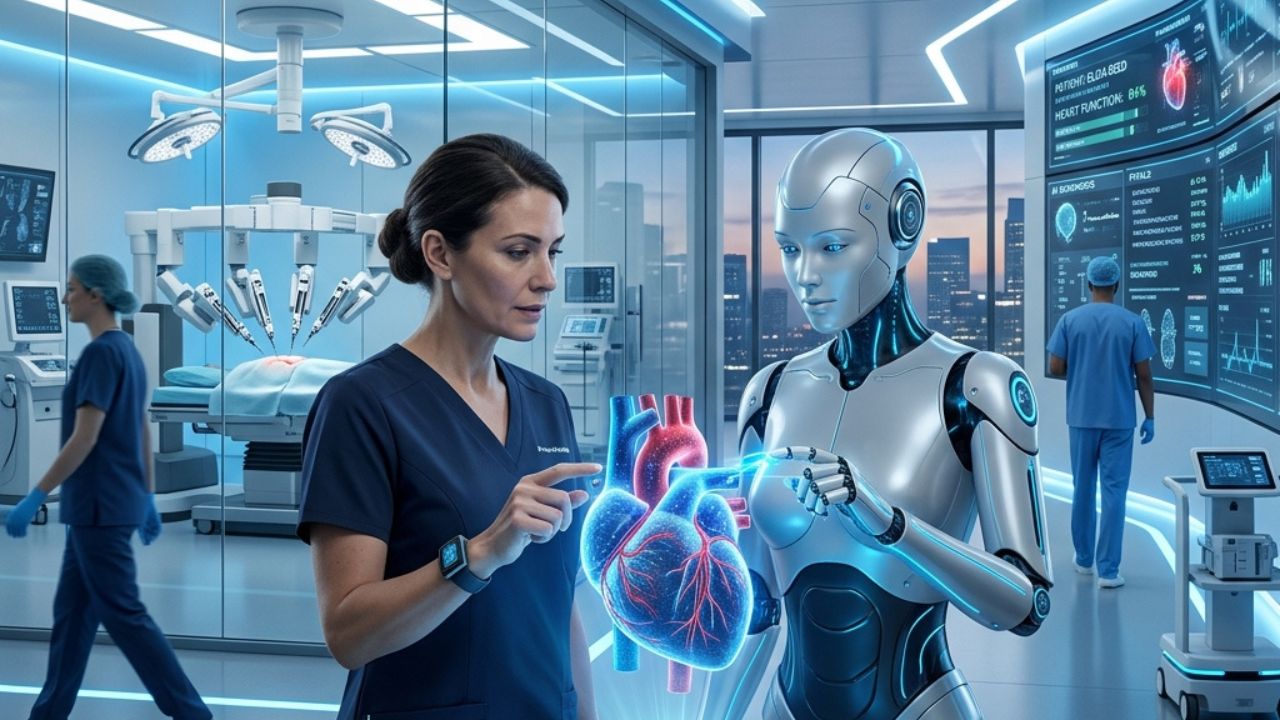
Quick answer: Artificial intelligence is transforming healthcare by improving diagnostic accuracy, accelerating drug discovery, and optimizing patient care management. AI solutions like machine learning algorithms and robotic-assisted surgery allow medical professionals to analyze vast medical datasets, personalize treatments for individual patients, and significantly reduce administrative burdens across hospital networks.
Medicine is currently undergoing a monumental shift, driven by the rapid integration of artificial intelligence into clinical and administrative workflows. For decades, medical professionals relied primarily on observational data and manual analysis to diagnose and treat diseases. Today, powerful algorithms process millions of data points in seconds, offering insights that were previously impossible to uncover.
Artificial intelligence serves as a transformative force in healthcare, redefining diagnostics, treatment, and patient care. Rather than replacing human doctors, AI acts as a sophisticated partner that enhances human capabilities. It allows physicians to detect illnesses earlier, helps pharmaceutical companies discover life-saving medications faster, and gives hospitals the tools they need to operate efficiently.
This post will explore the current landscape of AI in healthcare. We will examine how AI solutions are enhancing diagnostics, revolutionizing therapies, improving patient care, and streamlining administrative operations, while also addressing the ethical challenges and future outlook of this technology.
Why is Artificial Intelligence Becoming Essential in Modern Healthcare?
The concept of using computers to assist in medical decisions is not entirely new. Early computer-aided diagnosis systems emerged in the 1970s, but they were limited by basic programming and a lack of digital health records. Today, the landscape is entirely different.
The current explosion of AI in healthcare stems from three main factors: massive data availability, unprecedented computational power, and highly advanced machine learning algorithms. Electronic health records (EHRs), wearable health trackers, and high-resolution medical imaging generate massive amounts of data every day. Advanced AI systems can now ingest this data, learn from it, and provide actionable clinical recommendations.
However, this rapid adoption brings significant ethical considerations. Healthcare organizations must carefully manage the human-AI collaboration. Doctors must retain the final decision-making authority, using AI as a supportive diagnostic tool rather than an absolute medical authority. Ensuring that AI models are transparent and free from bias is critical to maintaining patient trust and delivering equitable care.
How is Artificial Intelligence Improving Medical Diagnostics?
Accurate and timely diagnosis is the foundation of effective medical treatment. AI systems excel at pattern recognition, making them incredibly valuable for diagnosing complex diseases.
Enhancing Medical Imaging Interpretation
Medical imaging relies heavily on visual analysis, a task where deep learning algorithms shine. AI systems can quickly analyze X-rays, MRIs, and CT scans to detect tumors, fractures, and anomalies that the human eye might miss. For example, AI algorithms are currently used for early cancer detection, spotting minute changes in breast tissue on mammograms long before a traditional radiologist might flag them. Similarly, AI-powered retinopathy screening helps ophthalmologists detect diabetic eye disease quickly, preventing vision loss in vulnerable patients.
Advancing Pathology and Tissue Analysis
Pathologists traditionally examine tissue samples under a microscope to diagnose diseases like cancer. AI-powered pathology tools digitize this process, using computer vision to analyze tissue slides with incredible precision. These systems identify disease biomarkers quickly and quantify cellular abnormalities, leading to more accurate grading of tumors and better-informed treatment plans.
Enabling Personalized Diagnostics
Every patient has a unique genetic makeup, and AI helps doctors account for this variability. By integrating genomic data with standard clinical information, AI platforms deliver tailored diagnoses. Predictive analytics tools can assess a patient’s genetic risk factors and lifestyle data to predict their likelihood of developing chronic conditions like heart disease or diabetes, allowing for early intervention.
In What Ways is AI Revolutionizing Medical Treatments and Therapies?
Once a diagnosis is made, AI continues to play a vital role in determining and executing the best course of action.
Accelerating Drug Discovery and Development
Bringing a new drug to market typically takes over a decade and costs billions of dollars. AI accelerates this timeline by analyzing biological data to identify potential drug candidates rapidly. Machine learning models predict how different chemical compounds will interact with specific target proteins, significantly reducing research and development costs. Furthermore, AI helps pharmaceutical companies repurpose existing approved drugs for new medical indications, bypassing years of safety testing.
Driving Precision Medicine Initiatives
Precision medicine tailors medical treatment to the individual characteristics of each patient. AI systems analyze a patient’s genetic profile, medical history, and current metabolic state to recommend personalized treatment plans. In oncology, AI helps oncologists optimize chemotherapy dosages and select specific therapeutic interventions that are most likely to shrink a patient’s unique tumor type, minimizing adverse side effects.
Refining Robotic-Assisted Surgery
Robotic-assisted surgery combines AI with advanced robotics to enhance surgical precision. AI-powered surgical robots stabilize a surgeon’s movements, allowing for minimally invasive procedures with smaller incisions and faster recovery times. Additionally, AI simulation platforms provide a risk-free environment for medical students and surgeons to practice complex procedures before operating on live patients.
How Can AI Improve Patient Care and Health Management?
Beyond the operating room and the laboratory, artificial intelligence directly impacts how patients experience healthcare on a daily basis.
Utilizing Predictive Analytics for Patient Deterioration
Hospitals use AI-driven predictive analytics to monitor patients in intensive care units. These early warning systems continuously analyze vital signs to predict sudden patient deterioration. For instance, AI algorithms can detect the subtle physiological changes that precede sepsis or cardiac arrest hours before symptoms become clinically obvious. This allows nursing staff to launch proactive interventions, dramatically improving patient safety and survival rates.
Deploying Virtual Assistants and Medical Chatbots
AI-powered virtual assistants and chatbots help healthcare providers manage patient communications. These conversational AI tools answer basic patient queries, schedule appointments, and send automated medication reminders. In the realm of mental health, specialized AI chatbots provide initial psychological support and facilitate tele-consultations, offering patients immediate resources while they wait for human therapists.
Expanding Remote Monitoring and Wearable Devices
The proliferation of smartwatches and medical wearables allows doctors to monitor patients outside the clinical setting. AI platforms analyze continuous health data from these devices, such as heart rate variability and blood oxygen levels. This remote monitoring enables proactive care for chronic conditions like asthma or hypertension. If a patient’s wearable device detects an irregular heartbeat, the AI system can automatically alert their cardiologist to review the data.
How Does AI Optimize Hospital Operations and Administration?
While clinical applications often grab the headlines, AI’s impact on hospital administration is equally profound.
Streamlining Workflow Optimization
Hospitals are complex organizations that require meticulous resource allocation. AI systems optimize clinical workflows by predicting patient admission rates, optimizing staff scheduling, and managing bed availability. By automating routine documentation and EHR data entry, natural language processing tools reduce the heavy administrative burden on doctors and nurses, allowing them to spend more face-to-face time with patients.
Enhancing Fraud Detection and Cybersecurity
Healthcare organizations manage vast amounts of highly sensitive personal data, making them prime targets for cyberattacks. AI cybersecurity platforms monitor hospital networks in real-time to detect anomalous behavior and prevent data breaches. Additionally, health insurance companies utilize AI algorithms to identify fraudulent claims by spotting billing inconsistencies, saving the healthcare industry billions of dollars annually.
What Are the Biggest Challenges Facing AI in Healthcare?
Despite its immense potential, the integration of artificial intelligence into modern medicine faces several significant hurdles.
Data privacy and security remain top concerns. Training robust AI models requires access to massive datasets of patient information, raising questions about patient consent and data anonymization under regulations like HIPAA. Furthermore, regulatory agencies like the FDA face challenges in validating AI algorithms, particularly “black box” models where the decision-making process is not entirely transparent to human reviewers.
Integrating new AI tools with legacy healthcare infrastructure also presents a technical challenge. Many hospitals operate on outdated EHR systems that do not communicate easily with modern AI platforms. As AI takes on more clinical tasks, the role of healthcare professionals must evolve. Medical schools need to update their curricula to teach future doctors how to interpret AI-generated insights responsibly.
Looking ahead, future trends point toward the development of Explainable AI (XAI), which provides transparent reasoning for its medical recommendations. Federated learning will allow hospitals to train AI models collaboratively without sharing raw patient data, protecting patient privacy while improving algorithm accuracy.
Embracing the Future of AI-Powered Medicine
The integration of artificial intelligence into healthcare represents one of the most significant medical advancements of our time. From detecting cancers earlier with medical imaging to formulating personalized drug regimens, AI solutions are fundamentally improving the quality and efficiency of modern medicine. While challenges surrounding data privacy and regulatory validation remain, the continued collaboration between technology developers and medical professionals will ultimately overcome these barriers.
To stay ahead in this rapidly evolving field, healthcare administrators and medical professionals must actively explore AI integration. Start by auditing your current clinical workflows to identify administrative bottlenecks that AI could easily automate, or consult with health-tech vendors to pilot AI diagnostic tools in your radiology or pathology departments.
Frequently Asked Questions (FAQ)
What is the cost of implementing AI in a hospital setting?
The cost varies widely depending on the scope of the project. Small AI software solutions for administrative scheduling might cost a few thousand dollars annually, while enterprise-grade diagnostic AI platforms or robotic surgical systems require millions of dollars in upfront investment and ongoing maintenance.
How long does it take to integrate AI into existing clinical workflows?
Integration timelines depend on the hospital’s current digital infrastructure. Deploying a basic AI chatbot for patient scheduling can take just a few weeks. However, integrating complex diagnostic AI models with legacy Electronic Health Record (EHR) systems often requires six to twelve months of development, testing, and staff training.
What are the main risks of using AI for medical diagnoses?
The primary risk is algorithmic bias, which occurs if the AI model was trained on non-diverse patient data, potentially leading to inaccurate diagnoses for underrepresented demographics. There is also the risk of “automation bias,” where medical professionals overly rely on the AI’s recommendation and ignore their own clinical judgment.
Are there alternatives to AI for improving hospital efficiency?
Yes. Hospitals can improve efficiency through traditional methods like Lean management principles, updating standardized clinical protocols, hiring more administrative support staff, or upgrading non-AI digital health record software to streamline data entry.
Who benefits most from AI precision medicine?
Patients with complex, highly variable diseases like cancer, autoimmune disorders, and rare genetic conditions benefit the most. Precision medicine allows oncologists and specialists to tailor drug types and dosages specifically to the patient’s unique genetic makeup, improving efficacy and reducing side effects.