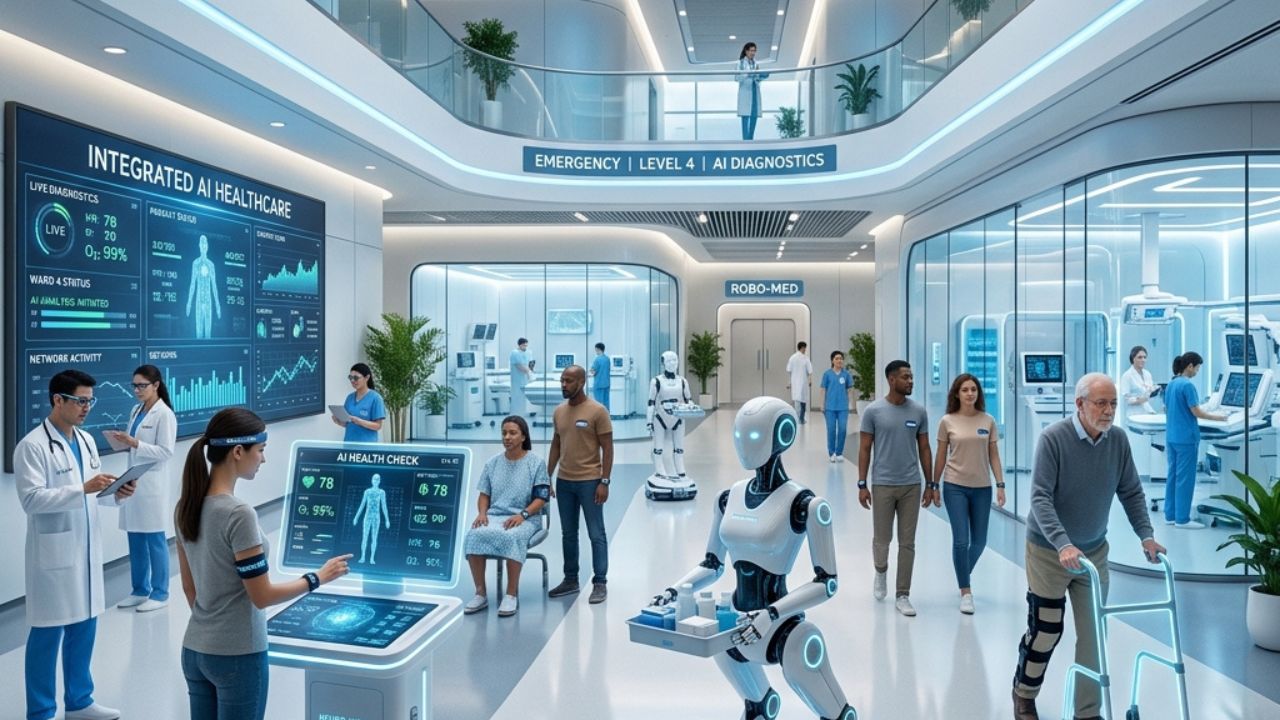
Walking into a hospital a decade from now will feel entirely different from the medical facilities we know today. The traditional model of healthcare relies heavily on manual processes, fragmented communication, and reactive treatments. Now, a massive shift is underway across the United States. Healthcare facilities are transitioning into interconnected, intelligent ecosystems known as smart hospitals. These advanced medical centers use digital technology, interconnected devices, and artificial intelligence to improve every aspect of patient care and facility management.
The current landscape of digital healthcare in the USA shows rapid adoption of these new technologies. Electronic health records (EHRs) are now the standard. Telehealth visits have become a routine part of primary care. Yet, the true potential of the smart hospital extends far beyond digital record-keeping and video calls. Hospitals are beginning to integrate advanced algorithms and smart sensors directly into their daily operations, creating a seamless flow of information between patients, providers, and medical equipment.
Artificial intelligence is serving as the primary engine for this transformation. By analyzing massive amounts of data in real time, AI is fundamentally revolutionizing healthcare delivery. From catching diseases before symptoms appear to managing hospital supply chains without human intervention, AI is improving patient outcomes and alleviating the intense pressure placed on healthcare workers.
The Role of Artificial Intelligence in Smart Hospitals
Artificial intelligence operates as the central nervous system of a smart hospital. It processes inputs from thousands of different sources and translates that data into actionable insights for medical professionals.
AI in Diagnostics and Treatment
Precision medicine allows doctors to tailor treatment plans to an individual’s genetic makeup, lifestyle, and environment. AI algorithms excel at analyzing these complex variables to recommend highly personalized therapies. Doctors can use these insights to prescribe medications that are more likely to work for a specific patient, reducing the painful process of trial and error.
Early disease detection is another area experiencing a massive upgrade. Predictive analytics can flag patients who are at high risk for conditions like sepsis or heart failure hours or even days before critical symptoms manifest. Furthermore, AI-powered medical imaging is transforming radiology. Algorithms can scan X-rays, MRIs, and CT scans to highlight microscopic abnormalities, helping radiologists catch tumors and fractures with incredible speed and accuracy.
AI in Hospital Operations and Management
Beyond the operating room, AI helps hospitals run like well-oiled machines. Optimized workflow and resource allocation ensure that beds, operating rooms, and medical equipment are available exactly when needed. Algorithms predict patient admission rates based on historical data, weather patterns, and local health trends, allowing administrators to adjust staffing levels proactively.
Supply chain management also benefits from machine learning. AI tracks inventory levels in real time and automatically orders essential supplies like gloves, syringes, and medications before they run out. Additionally, AI automates administrative tasks such as medical billing, coding, and scheduling. This automation frees up hospital staff to focus on direct patient care rather than drowning in paperwork.
Key Technologies Driving the Smart Hospital Revolution
While AI provides the intelligence, several other core technologies serve as the physical and digital infrastructure of the smart hospital.
Internet of Medical Things (IoMT)
The Internet of Medical Things connects physical devices to hospital networks. Wearable devices and remote patient monitoring tools allow doctors to track a patient’s vital signs, blood sugar levels, and heart rhythms from miles away. Inside the hospital, smart sensors attach to hospital beds and medical devices. These sensors continuously beam data to central nursing stations, ensuring that staff have a real-time view of every patient’s status.
Big Data Analytics
Smart hospitals generate an overwhelming amount of information every second. Big data analytics platforms harness this healthcare data to find meaningful patterns. Hospital administrators use these insights to improve care protocols and reduce readmission rates. However, managing this data requires strict adherence to ethical considerations and data security protocols. Protecting sensitive health information from cyber threats is a mandatory function of any healthcare analytics platform.
Robotics and Automation
Robotics bring digital intelligence into the physical world. Surgical robots allow surgeons to perform complex, minimally invasive procedures with a level of precision that human hands cannot match. In the hospital pharmacy, automated drug dispensing systems reduce medication errors and speed up the delivery of prescriptions to the ward. Behind the scenes, robotic process automation (RPA) handles repetitive digital tasks in healthcare administration, verifying insurance claims and updating patient files continuously.
Benefits of Smart Hospitals for Patients and Providers
The transition to smart hospitals yields significant advantages for everyone involved in the healthcare ecosystem.
Enhanced Patient Experience
Patients benefit from vastly improved access to care through telemedicine portals and digital triage systems. Care becomes highly personalized, and patient engagement rises when individuals can access their health data through user-friendly mobile apps. Smart scheduling systems also reduce wait times in emergency rooms and clinics, leading to faster and more efficient consultations.
Increased Operational Efficiency and Cost Savings
For healthcare providers, smart technologies streamline complex processes and heavily reduce human error. Predictive maintenance algorithms monitor vital medical equipment like MRI machines and ventilators, alerting technicians to potential failures before the machines actually break down. Ultimately, these efficiencies translate to cost-effective healthcare delivery, helping hospitals manage tight budgets without sacrificing the quality of care.
Improved Clinical Outcomes and Patient Safety
Real-time monitoring allows nurses and doctors to intervene early when a patient’s condition begins to deteriorate. By relying on smart dispensing systems and AI diagnostic checks, hospitals see a sharp reduction in medical errors and adverse events. Enhanced data-driven decision-making means that clinicians always have the most relevant, up-to-date research and patient history at their fingertips before making critical treatment choices.
Challenges and Considerations in Adopting Smart Hospital Technologies
Despite the clear benefits, hospitals face several high hurdles when upgrading their technological infrastructure.
Data Privacy and Security Concerns
Healthcare data is highly valuable on the black market. Hospitals must maintain strict HIPAA compliance while defending against increasingly sophisticated cybersecurity threats. Administrators must also navigate the ethical implications of AI in healthcare, ensuring that algorithms do not perpetuate biases or compromise patient confidentiality.
Interoperability and Integration Issues
Many healthcare systems rely on legacy software that cannot communicate with modern applications. These fragmented healthcare systems create data silos, preventing doctors from seeing a patient’s complete medical history. Establishing standardized data exchange protocols is essential so that a smart sensor can seamlessly communicate with an electronic health record system.
Workforce Training and Adaptation
Medical professionals need comprehensive training to use new digital tools effectively. Reskilling healthcare professionals requires significant time and financial investment. Leadership must also address job displacement concerns, reassuring staff that AI is meant to augment human capabilities and handle tedious tasks, rather than replace medical workers.
Regulatory Frameworks and Policy
The medical field is heavily regulated for good reason. Government regulations must continually adapt to address the use of AI in medicine, dictating exactly how autonomous systems can be used in patient care. Furthermore, securing the necessary funding and investment for smart hospital infrastructure remains a major challenge, particularly for rural and underfunded public hospitals.
Case Studies of Leading Smart Hospitals in the USA
Several pioneering institutions are already demonstrating the power of smart hospital technology. The Mayo Clinic has heavily invested in AI-driven diagnostics, partnering with technology firms to develop algorithms that detect cardiovascular diseases early. The Cleveland Clinic utilizes advanced telemedicine command centers to monitor ICU patients across multiple facilities simultaneously, using predictive analytics to alert staff to potential health crises.
Johns Hopkins Hospital implemented a highly sophisticated capacity command center. This digital hub uses predictive AI to manage bed availability, dispatch transport teams, and coordinate operating room schedules. By centralizing this data, the hospital drastically reduced patient wait times and improved the overall flow of the facility.
The Future Outlook of Smart Hospitals in the USA
Looking ahead, the integration of technology and medicine will only accelerate. Emerging trends include the use of digital twins—virtual replicas of the hospital—to simulate and test new operational strategies without disrupting actual patient care. Augmented reality (AR) will likely become a standard tool for surgical training and remote consultations.
The ultimate vision is a fully integrated digital healthcare ecosystem. In this future state, a patient’s wearable device will communicate with their primary care doctor, local pharmacy, and the nearest smart hospital seamlessly. This level of integration carries a profound impact on public health and healthcare equity, allowing medical professionals to monitor chronic diseases remotely and provide high-quality care to patients in underserved communities.
A New Era of Patient-Centric Care
Artificial intelligence and digital technologies are fundamentally rebuilding the American healthcare system from the ground up. By optimizing workflows, enhancing diagnostic accuracy, and prioritizing proactive treatments, smart hospitals offer a more resilient and effective model of care.
The evolution of smart hospitals will require heavy investment, rigorous cybersecurity, and a willingness to adapt to new workflows. However, the resulting improvements in patient safety and operational efficiency make this transition absolutely vital. Stakeholders across the healthcare industry—from hospital executives to software developers and policymakers—must collaborate to build standardized, secure, and equitable digital health systems. The next generation of medical care is here, and it is time to embrace the tools that will save lives and redefine healing.