A stroke is a severe medical event where every single second impacts the patient’s future. When a blockage or bleed interrupts blood flow to the brain, millions of neurons can die within minutes. Knowing exactly where to go for the highest level of care can dramatically alter the outcome, turning a potentially devastating event into a story of recovery.
Navigating the healthcare system during a sudden health crisis is incredibly stressful. Families frequently face split-second decisions about which emergency room to choose while waiting for an ambulance. Having a clear plan and understanding the specific capabilities of local medical centers is a vital component of medical preparedness.
This guide highlights the leading hospitals for stroke treatment across the United States. You will learn about the strict criteria that define comprehensive care facilities, why rapid response is critical to brain health, and how to identify the best medical centers in your specific region. Armed with this knowledge, you and your family can make informed, confident choices when faced with a life-threatening emergency.
The Golden Hour: Why Rapid Response Matters
Medical professionals frequently refer to the first sixty minutes after symptom onset as the “golden hour.” This brief window is the optimal time to evaluate the patient and administer clot-busting medications like tissue plasminogen activator (tPA). Receiving tPA within this timeframe significantly increases the chances of a full recovery and minimizes long-term disability.
When a stroke occurs, the brain is deprived of oxygen. The longer the brain goes without optimal blood flow, the more extensive the permanent damage becomes. Fast medical intervention aims to restore that blood flow before irreversible tissue death occurs. Emergency medical technicians (EMTs) begin this process in the ambulance by alerting the destination hospital, allowing the neurology team to prepare the imaging machines and operating rooms.
Arriving at a hospital equipped to handle severe neurological emergencies immediately upon noticing symptoms is crucial. Delaying treatment by visiting an urgent care clinic or a hospital without specialized neurological capabilities wastes precious time. Understanding the hierarchy of medical facilities ensures the patient gets the right treatment at the right moment.
Key Criteria for Top Stroke Centers
Not all hospitals possess the resources to treat complex neurological emergencies. Evaluating a hospital’s capabilities requires looking at specific certifications awarded by organizations like The Joint Commission, the American Heart Association, and the American Stroke Association.
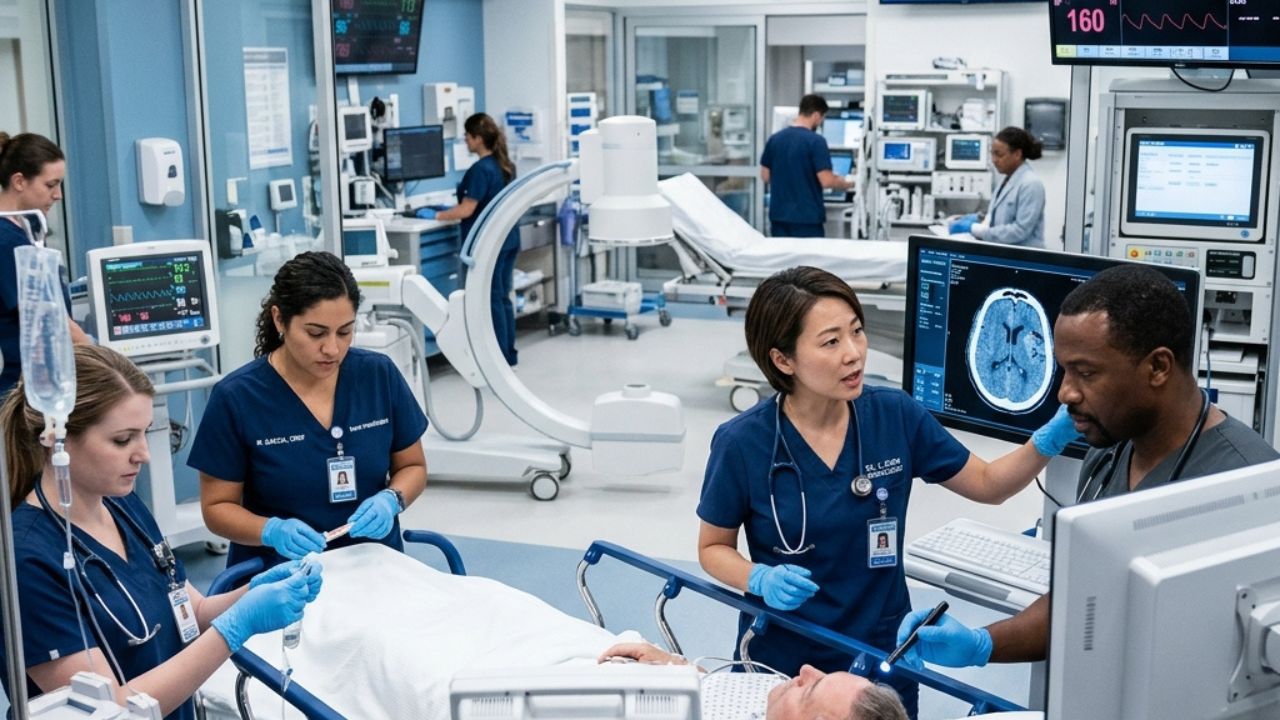
The most important factor is the presence of a dedicated, multidisciplinary stroke team available 24 hours a day, seven days a week. This team usually includes vascular neurologists, neurosurgeons, emergency physicians, and specialized nurses. Furthermore, top centers must have advanced neuroimaging capabilities, such as MRI and CT perfusion scanners, running around the clock.
Another crucial criterion is the volume of patients the facility treats annually. High-volume centers tend to have better patient outcomes because their staff performs complex procedures routinely. Consistent practice allows the medical team to refine their techniques, recognize rare complications quickly, and provide a higher standard of overall care.
Comprehensive Stroke Centers: What to Look For
Hospitals generally fall into different tiers of stroke care certification. Primary Stroke Centers (PSCs) can stabilize patients and administer intravenous clot-busting drugs. However, patients with severe or complex blockages require a Comprehensive Stroke Center (CSC).
Comprehensive Stroke Centers represent the highest level of care available. These facilities are uniquely equipped to perform advanced surgical interventions, such as mechanical thrombectomy. During a thrombectomy, a neurosurgeon threads a catheter through an artery to physically remove a large blood clot from the brain. This procedure requires highly specialized training and state-of-the-art surgical suites.
Additionally, CSCs feature dedicated neurological intensive care units (Neuro-ICUs). These specialized wards are staffed by providers who monitor patients for dangerous post-operative complications, such as brain swelling or secondary bleeding. When researching local options, identifying the nearest certified Comprehensive Stroke Center should be a top priority for your family’s emergency plan.
Top-Ranked Hospitals for Stroke Treatment in the USA
Several medical institutions consistently rank at the top of national lists for neurology and neurosurgery. These hospitals pioneer new treatments, conduct extensive clinical trials, and employ the most experienced vascular neurologists in the country.
Mayo Clinic in Rochester, Minnesota, is frequently recognized as a premier destination for complex neurological care. Their collaborative approach ensures that multiple specialists review each patient’s case, leading to highly personalized treatment plans. Cleveland Clinic in Ohio is another top-tier institution, renowned for its cutting-edge research and exceptional patient survival rates following severe cerebrovascular events.
Massachusetts General Hospital in Boston and Johns Hopkins Hospital in Baltimore also lead the nation in stroke care. Both institutions function as major teaching hospitals, meaning they have access to the latest experimental therapies and diagnostic technologies. They provide seamless transitions from the emergency room to the Neuro-ICU, ensuring continuous, high-level monitoring throughout the critical early days of recovery.
Regional Spotlight: Best Stroke Hospitals by Geographic Area
Because time is of the essence, flying across the country during an active emergency is impossible. You need to know the best options accessible by a local ambulance or helicopter. Here is a breakdown of highly rated Comprehensive Stroke Centers by region.
The Northeast
Massachusetts General Hospital and New York-Presbyterian Hospital boast massive, highly coordinated neurology departments. New York-Presbyterian specifically utilizes mobile stroke treatment units—specialized ambulances equipped with CT scanners—to begin treatment before the patient even reaches the hospital doors.
The Midwest
Alongside the Mayo Clinic and Cleveland Clinic, Northwestern Memorial Hospital in Chicago provides exceptional care for the Midwest region. Their stroke network coordinates with smaller community hospitals to quickly transfer patients requiring advanced surgical interventions.
The South
Emory University Hospital in Atlanta and Duke University Hospital in North Carolina serve as massive regional hubs for the South. Emory has been a leader in clinical trials that have fundamentally changed national guidelines for extending the window of time in which a mechanical thrombectomy can be performed.
The West
UCSF Medical Center in San Francisco and Cedars-Sinai Medical Center in Los Angeles dominate the Western United States. UCSF is particularly noted for its neurovascular surgery outcomes and its comprehensive rehabilitation programs that begin almost immediately after the patient stabilizes.
Preparing for a Stroke Emergency: Personal and Family Guide
Medical emergencies are unpredictable, but your response does not have to be. Creating an emergency action plan can save precious minutes when a loved one falls ill.
The first step is memorizing the FAST acronym to recognize symptoms:
- Face drooping: Does one side of the face sag or feel numb?
- Arm weakness: Is one arm numb or weaker than the other?
- Speech difficulty: Is speech slurred or hard to understand?
- Time to call 911: If you observe any of these signs, call emergency services immediately.
Next, research the hospitals in your immediate vicinity. Identify the closest Primary Stroke Center and the closest Comprehensive Stroke Center. Keep their addresses and phone numbers written down on the refrigerator and saved in your phone.
Finally, maintain an updated list of your family members’ medications, allergies, and medical histories. Keep this list in a wallet or purse. Paramedics and emergency room doctors need this information to safely administer powerful clot-busting drugs. Handing the medical team a printed list allows them to bypass lengthy questions and proceed directly to treatment.
Life After Stroke: Rehabilitation and Recovery
Surviving the initial medical crisis is only the first part of the journey. The brain possesses a remarkable ability to rewire itself—a process known as neuroplasticity—but this requires guided, intensive effort. Rehabilitation usually begins within 24 to 48 hours after the stroke, while the patient is still in the hospital.
A robust recovery plan involves a multidisciplinary team. Physical therapists help patients regain mobility, balance, and muscle strength. Occupational therapists assist patients in relearning daily activities, such as getting dressed, cooking, and writing. Speech-language pathologists work with individuals who have difficulty speaking, understanding language, or swallowing.
Emotional and psychological support is equally vital. Experiencing a sudden loss of independence often leads to depression or anxiety. The best medical centers offer integrated counseling services and connect families with local support groups. Recovery is a marathon, and building a strong support network is essential for the long-term well-being of both the patient and their caregivers.
Empowering Patients and Families with Knowledge
Understanding the landscape of emergency neurological care gives you a distinct advantage during a crisis. By learning how to identify the signs of a stroke, recognizing the importance of the golden hour, and knowing the locations of the best Comprehensive Stroke Centers in your region, you take active control of your family’s health preparedness.
Take a few moments today to research the medical facilities near your home and workplace. Write down the fastest routes to the nearest certified centers and share this information with your household. Preparation removes the guesswork from an emergency, ensuring that if the unthinkable happens, your loved ones receive the absolute best care available.