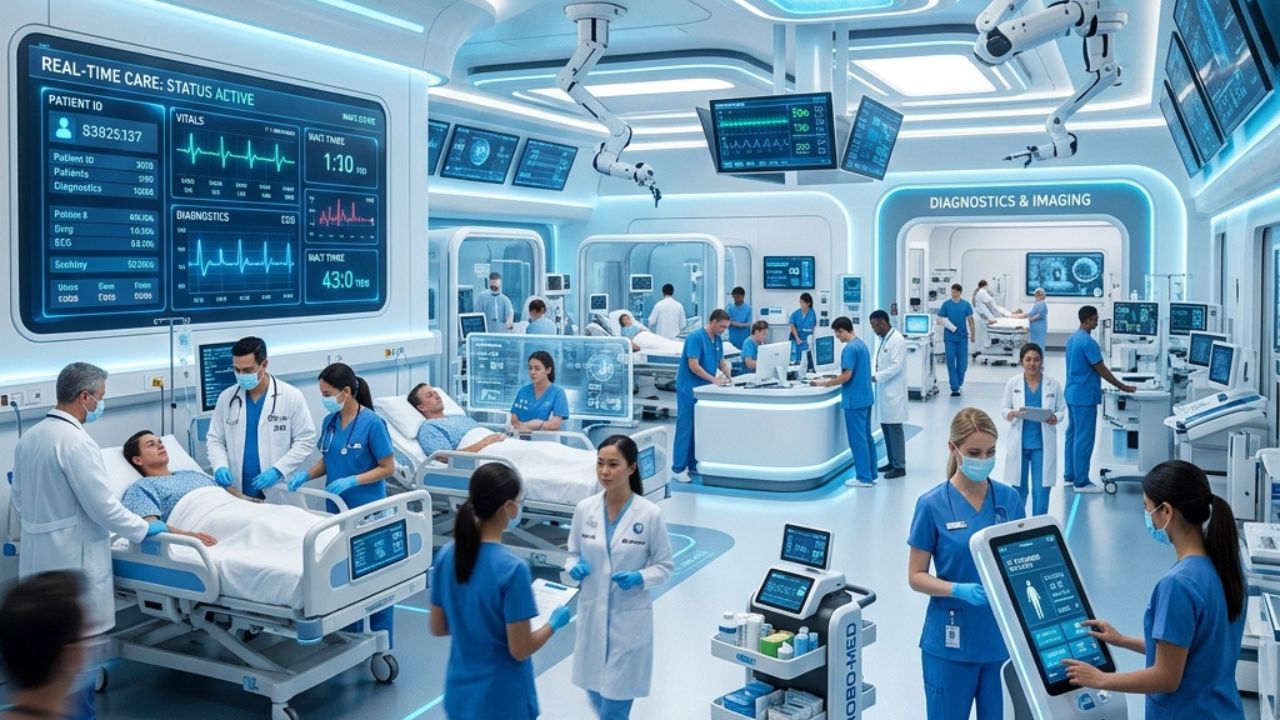
he top hospitals for Advanced Emergency Response Systems (AERS) in the USA include Massachusetts General Hospital, Mayo Clinic, Johns Hopkins, Cleveland Clinic, and Stanford Health Care. These medical centers lead the nation by integrating artificial intelligence, telemedicine, and specialized trauma protocols to drastically reduce response times and improve critical patient survival rates.
When every second counts, the quality of a hospital’s emergency department dictates the line between life and death. The critical role of emergency response in healthcare cannot be overstated. A delay of mere minutes often leads to irreversible tissue damage during a stroke or heart attack. To combat these risks, leading medical institutions rely on Advanced Emergency Response Systems (AERS).
These highly integrated networks of technology, protocols, and specialized personnel allow hospitals to react to life-threatening conditions with unprecedented speed and accuracy. This post will explore the top hospitals in the USA renowned for their cutting-edge AERS, highlighting the specific technologies and practices that make them national leaders in emergency care.
What are Advanced Emergency Response Systems (AERS) and why do they matter?
An Advanced Emergency Response System (AERS) is a comprehensive framework designed to optimize every phase of emergency medical care. It moves far beyond the traditional triage desk, relying on interconnected components to streamline patient treatment from the point of injury to the operating room.
What are the main components of an AERS?
A modern AERS relies on a distinct combination of technology, protocols, and personnel.
First, hospitals use technology like artificial intelligence (AI), telemedicine platforms, rapid point-of-care diagnostics, and interoperable electronic health records (EHR). These tools allow doctors to view a patient’s medical history before an ambulance even arrives at the loading bay.
Second, strict clinical protocols govern the workflow. These include rapid triage pathways, inter-departmental communication guidelines, and specialized tracks for specific emergencies like the “stroke alert” or “trauma alert” pathways.
Finally, the system requires highly specialized personnel. Trauma surgeons, emergency medicine physicians, critical care nurses, and paramedics undergo continuous, rigorous training to execute these protocols flawlessly under extreme pressure.
Why does AERS implementation matter for patient care?
Implementing a robust AERS directly correlates with improved patient outcomes and higher survival rates. According to the American Heart Association (AHA), hospitals that utilize standardized advanced response protocols for cardiac events see significantly lower mortality rates.
Furthermore, these systems enhance operational efficiency. By minimizing bottlenecks in the emergency department (ED), hospitals reduce response times and patient boarding times. This efficiency also yields cost-effectiveness, optimizing hospital resources and ensuring critical care beds are allocated to those who need them most.
How do we determine the top hospitals for emergency response?
Evaluating the effectiveness of a hospital’s emergency department requires a look at objective, standardized criteria. Medical organizations look at specific metrics to determine which facilities offer the best care.
What key metrics define top-tier emergency hospitals?
Healthcare watchdogs prioritize response time and patient transfer efficiency. The speed at which a patient goes from the ED doors to a catheterization lab or operating room serves as a primary indicator of AERS quality.
Survival rates for critical conditions—specifically acute ischemic stroke, myocardial infarction (MI), and severe physical trauma—also weigh heavily in hospital rankings. Additionally, evaluators look for deep technological integration, ongoing staff specialization, and active research and development in emergency medicine.
Data for these evaluations typically comes from the Joint Commission, the American Heart Association (AHA), the Centers for Medicare & Medicaid Services (CMS), peer-reviewed academic studies, and internal hospital reporting metrics.
Which US hospitals have the best Advanced Emergency Response Systems?
Based on the stringent criteria outlined above, several hospitals stand out for their exceptional emergency care capabilities. Here is a detailed look at the leading institutions.
What makes Massachusetts General Hospital a leader in AERS?
Massachusetts General Hospital (MGH) in Boston, Massachusetts, consistently ranks among the top hospitals nationwide. As a Level 1 Adult and Pediatric Trauma Center, MGH handles some of the most complex emergency cases in New England.
MGH utilizes AI-powered triage systems to prioritize patients based on predictive risk algorithms. The hospital’s AERS also features highly refined stroke alert pathways that activate a multidisciplinary neurovascular team before the patient arrives. MGH maintains a dedicated helipad for rapid MedFlight transport and deploys mobile emergency units to provide on-site critical care during major city events. The hospital’s disaster preparedness protocols, famously executed during the 2013 Boston Marathon, serve as a global benchmark for mass-casualty emergency response. Choose MGH if you require highly specialized neuro-emergency or disaster response expertise.
How does the Mayo Clinic use AERS for remote and emergency care?
Located in Rochester, Minnesota, the Mayo Clinic is globally recognized for its patient-centered approach and diagnostic excellence. The Mayo Clinic’s emergency department integrates advanced AERS concepts to serve both local and regional populations.
A defining feature of the Mayo Clinic’s AERS is its heavy integration of telemedicine. Through the Mayo Clinic Care Network, emergency physicians consult remotely on complex cases with regional hospitals, bringing world-class expertise to rural EDs. The Rochester ED features advanced diagnostic imaging located directly within the emergency suite, eliminating the need to transport unstable patients through hospital corridors. The Mayo Clinic also runs premier training programs for emergency personnel, focusing heavily on simulation-based high-acuity scenarios.
Why is Johns Hopkins Hospital highly rated for trauma and critical care?
Johns Hopkins Hospital in Baltimore, Maryland, operates one of the most dynamic and high-volume emergency departments on the East Coast. It is a designated Level 1 Trauma Center with a deep focus on critical care and emergent surgical interventions.
Johns Hopkins integrates predictive analytics into its electronic health records to detect early signs of patient deterioration, such as sepsis, before clinical symptoms become obvious. The hospital’s AERS relies heavily on tight collaboration with local first responders, ensuring paramedics provide crucial data streams to the hospital while in transit. Furthermore, Johns Hopkins invests heavily in community outreach and education, aiming to reduce preventable emergencies through public health initiatives.
How does the Cleveland Clinic manage high-volume emergency patient flow?
The Cleveland Clinic in Cleveland, Ohio, is renowned for its cardiovascular and neurological expertise, which extends directly into its emergency response capabilities.
The Cleveland Clinic manages massive patient volumes by emphasizing patient flow and minimizing ED wait times through a specialized “split-flow” triage model. Patients are rapidly sorted based on acuity, ensuring that minor injuries do not delay care for critical cardiac or stroke patients. The hospital boasts some of the fastest “door-to-balloon” times in the country for heart attack patients, reflecting a highly optimized AERS. The Cleveland Clinic also engages in global health initiatives, sharing its emergency flow protocols with affiliated hospitals worldwide.
What advanced emergency technologies does Stanford Health Care utilize?
Stanford Health Care in Stanford, California, leverages its proximity to Silicon Valley to integrate cutting-edge technology into its AERS. As a Level 1 Trauma Center, Stanford combines academic research with clinical innovation.
Stanford Health Care adopts emerging technologies rapidly. Surgeons and emergency physicians utilize augmented reality (AR) tools for complex procedural planning and execution in trauma cases. The facility also features a highly specialized pediatric emergency department equipped with child-specific AERS protocols. Because of its integration with Stanford University, the ED frequently participates in clinical trials, giving patients access to next-generation emergency therapeutics and diagnostic tools. Choose Stanford Health Care if access to novel, technology-driven clinical trials is a priority.
What does the future hold for Advanced Emergency Response Systems?
The evolution of AERS is accelerating, driven by leaps in computing power and connectivity. Artificial intelligence and machine learning will soon move beyond predictive analytics to offer real-time diagnostic recommendations based on live patient telemetry. AI algorithms will continuously monitor ED patients, alerting nurses to subtle vital sign changes indicative of internal bleeding or respiratory failure.
Telemedicine will also expand dramatically. We will likely see the widespread adoption of “pre-hospital” telemedicine, where specialized doctors guide paramedics through complex, life-saving procedures in the back of an ambulance using high-definition video feeds and remote biometric monitoring.
Securing the best emergency care for the future
Advanced Emergency Response Systems represent the pinnacle of modern medical coordination. By combining rapid transport, sophisticated technology, and highly trained personnel, hospitals like Massachusetts General, Mayo Clinic, Johns Hopkins, Cleveland Clinic, and Stanford Health Care save countless lives each year. As AI and telemedicine continue to evolve, these systems will only become faster and more accurate. Understanding which hospitals lead in AERS development allows patients and healthcare advocates to make informed decisions about where to seek the highest standard of emergency care.
Frequently Asked Questions about Advanced Emergency Response Systems
What is the difference between a Level 1 and Level 2 trauma center?
A Level 1 Trauma Center provides the highest level of surgical care to trauma patients, with a full range of specialists and equipment available 24/7, alongside a required research and teaching program. A Level 2 center provides comprehensive trauma care and 24-hour availability of essential specialties, but is not required to have ongoing research programs or every surgical subspecialty on-site.
Does health insurance cover emergency care at top-tier hospitals?
Under the Affordable Care Act and the No Surprises Act, insurance companies must cover emergency services at any hospital, regardless of whether the facility is in-network, without requiring prior authorization. However, patients should verify specific policy details regarding post-stabilization care and admission coverage.
How does AI actually help in a hospital emergency department?
AI helps in emergency departments by analyzing patient data and prioritizing triage based on risk factors. It scans X-rays and CT scans in seconds to detect anomalies like brain bleeds, and monitors electronic health records to flag patients at high risk for sudden deterioration, such as developing sepsis.
Can telemedicine really be used for emergency situations?
Yes. Telemedicine is frequently used in emergencies, particularly for stroke care (telestroke). A remote neurologist can examine a patient via video link, review CT scans, and authorize the administration of clot-busting drugs within the critical time window, even if the patient is in a rural hospital without a neurologist on staff.