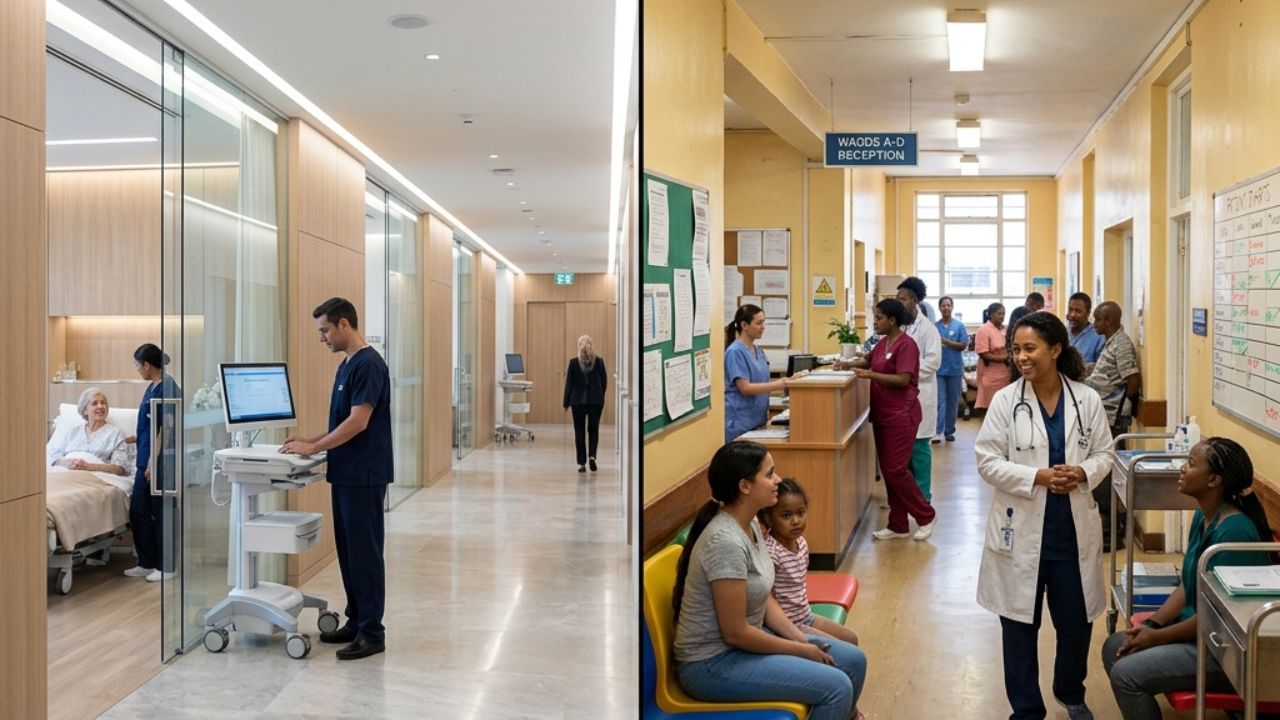
Navigating the United States healthcare system can feel like walking through a maze. Medical bills are notoriously high, and understanding exactly what you are paying for is a challenge for most patients. When you need medical care, you want to make sure you get the best treatment without emptying your bank account.
One of the biggest choices you might face is deciding between a public hospital and a private hospital. Both types of facilities provide essential medical care, but they operate very differently behind the scenes. Funding sources, profit motives, and patient demographics all play a huge role in how these hospitals run.
This brings up a critical question for anyone looking to manage their medical expenses: which type of hospital actually saves you money? To answer this, we need to unpack the cost differences, look at how insurance plays a role, and explore the unique billing structures of both public and private institutions.
Understanding Private Hospitals
Private hospitals make up a large portion of the healthcare facilities in the United States. They are typically owned by investors or private organizations.
Definition and characteristics
A private hospital operates as a business. Like any business, the primary goal is often to generate a profit, though some private hospitals do operate as non-profits. Profit-driven hospitals answer to shareholders and must maintain a strong financial bottom line. This focus heavily influences how they price their services and manage their daily operations.
Services offered and patient experience
Because private hospitals need to attract patients, they often invest heavily in the patient experience. You can usually expect shorter wait times, highly personalized care, and luxurious amenities. These facilities frequently offer specialized treatments and feature state-of-the-art medical technology. The environment is designed to be comfortable, catering to patients who want a premium healthcare experience.
Cost structures: insurance, out-of-pocket, billing
The premium experience at a private hospital comes with a premium price tag. Private hospitals typically charge higher rates for procedures, room stays, and specialized care. They rely heavily on private health insurance payouts. If you receive care out-of-network, or if you do not have insurance, your out-of-pocket expenses can be staggering. Billing practices are aggressive, and uninsured patients are usually billed the full list price for services.
Understanding Public Hospitals
Public hospitals serve a different, yet vital, role in the healthcare system. They are the safety net for millions of Americans.
Definition and characteristics
Public hospitals are fully funded and operated by local, state, or federal governments. They operate strictly on a non-profit basis. Their primary mission is to provide medical care to anyone who needs it, regardless of their ability to pay. Because they rely on government budgets and taxpayer money, they often face strict financial constraints.
Services offered and focus on underserved communities
These facilities offer a wide range of essential medical services, from emergency room care to general surgeries. Public hospitals often serve as teaching hospitals, meaning they are affiliated with medical schools. They focus heavily on providing care to underserved communities, low-income families, and the uninsured. While the care is high quality, the facilities might lack the luxurious amenities found in private hospitals.
Cost structures: sliding scales and government programs
Pricing at a public hospital is generally much more affordable. They actively participate in government programs like Medicaid and Medicare. For uninsured or low-income patients, public hospitals frequently use a sliding fee scale. This means your medical bill is adjusted based on your income level. If you cannot afford to pay, public hospitals have policies in place to offer charity care or heavy discounts.
The “Money-Saving” Factor: A Deeper Dive
So, how do the costs actually compare when the medical bills arrive? The answer depends heavily on your specific financial and insurance situation.
Comparing average costs for common procedures
On paper, public hospitals almost always charge less for standard procedures. For example, a routine appendectomy or a normal childbirth will generally have a lower base price at a government-funded facility. Private hospitals inflate their base prices to account for administrative overhead and profit margins.
The role of insurance: in-network vs. out-of-network
Your health insurance dictates a massive portion of your final bill. If a private hospital is in-network for your insurance plan, your insurer has negotiated a discounted rate. In this scenario, your out-of-pocket cost at a private hospital might be quite manageable. However, if you go to an out-of-network private hospital, you will be hit with massive bills. Public hospitals accept a much wider range of insurance plans, including state-funded programs.
Impact of deductibles, co-pays, and out-of-pocket maximums
Even with great insurance, you must pay attention to your deductible and co-pays. High-deductible health plans require you to pay thousands of dollars before coverage kicks in. If you have a high deductible, going to a cheaper public hospital for a scheduled procedure can save you a significant amount of money upfront.
Emergency care costs
In a medical emergency, you rarely have time to shop around. The Emergency Medical Treatment and Labor Act (EMTALA) requires all hospitals that accept Medicare to stabilize patients in an emergency, regardless of their ability to pay. However, once you are stabilized, the billing starts. Public hospitals usually offer more lenient payment plans and lower baseline emergency room fees compared to private emergency rooms.
Factors Influencing Hospital Costs Beyond Public/Private Status
The public versus private debate is just one piece of the puzzle. Several other factors heavily influence how much a hospital charges for care.
Location: urban vs. rural
Hospitals located in dense urban areas usually have higher operating costs due to real estate prices and higher wages. These costs are passed down to the patient. Rural hospitals might have lower overhead, but they often struggle with funding and might charge higher prices simply to keep their doors open.
Hospital size and specialization
Large, specialized research hospitals employ top-tier specialists and handle complex cases. These institutions charge more for their expertise. A smaller community hospital will usually have lower prices for basic care, but they might lack the resources for highly specialized surgeries.
Technology and equipment
Facilities that frequently upgrade to the latest robotic surgery tools and advanced imaging machines have to pay for that technology. To recoup their investments, they raise the prices of the procedures that utilize this equipment.
Administrative overhead and staffing
The US healthcare system is incredibly complex, requiring armies of administrative staff to handle insurance coding and billing. Hospitals with massive administrative departments pass those salaries onto the patients through higher medical bills.
Navigating the System: Tips for Consumers
You do not have to be completely helpless when it comes to medical billing. There are active steps you can take to protect your wallet.
Researching hospital costs before elective procedures
If you need a non-emergency procedure, take the time to shop around. Federal laws now require hospitals to publish their standard charges online. Use this price transparency to compare the costs of your specific surgery at both public and private hospitals in your area.
Understanding your insurance plan
Read your health insurance policy carefully. Know exactly which hospitals are in-network and which ones are out-of-network. Understand your deductible, your co-insurance rate, and your annual out-of-pocket maximum.
Negotiating bills and financial assistance programs
Never assume a medical bill is final. Hospital billing departments frequently make coding errors. Ask for an itemized bill and review every charge. Furthermore, most hospitals—both public and private—offer financial assistance programs. If you cannot afford your bill, call the billing department and ask to apply for financial aid or negotiate a lump-sum discount.
The importance of preventative care
The absolute best way to save money on hospital care is to avoid the hospital entirely. Keep up with routine check-ups, manage chronic conditions actively, and utilize urgent care clinics for minor injuries instead of expensive emergency rooms.
Case Studies: Real-World Scenarios
To see how these cost structures play out in real life, let us look at a few hypothetical scenarios.
Scenario 1: Uninsured patient with a broken leg
An uninsured patient goes to a private hospital for a broken leg. They receive excellent, fast care but are hit with a $15,000 bill. The private hospital demands a strict payment plan. If the same patient went to a public hospital, the base bill might be $8,000. Through the public hospital’s sliding scale and charity care policies, the final bill could be reduced to a fraction of that cost.
Scenario 2: Insured patient needing a common surgery
A patient with good, employer-sponsored health insurance needs gallbladder surgery. They choose an in-network private hospital. Because they have already met their deductible for the year, their insurance covers 80% of the cost. The patient enjoys a comfortable, private room and pays a reasonable co-insurance fee. In this case, the private hospital was a highly cost-effective and comfortable choice.
Scenario 3: Chronic condition management
A low-income patient requires ongoing treatment for diabetes complications. A private hospital would quickly become unaffordable due to high co-pays for frequent specialist visits. A public hospital system, working in tandem with Medicaid, provides the patient with affordable, continuous care that keeps them healthy without causing medical bankruptcy.
The Broader Implications for Healthcare
The differences between these hospitals highlight major systemic issues in the country.
Discussion on healthcare affordability and access
The fact that uninsured patients must rely almost entirely on public hospitals puts an immense financial strain on local governments. Meanwhile, private hospitals can cherry-pick patients with excellent insurance, leading to a two-tiered healthcare system where wealth dictates access to premium care.
Potential solutions and ongoing debates
Policymakers continue to debate how to fix these disparities. Expanding Medicaid, enforcing stricter price transparency laws, and regulating how private hospitals charge out-of-network patients are all heavily discussed solutions. Ensuring that public hospitals receive adequate federal funding is also critical to keeping the healthcare safety net intact.
Making an Informed Healthcare Decision
When deciding between a public and private hospital, there is no single answer that applies to everyone. Your decision ultimately depends on your health insurance status, your income, and the urgency of your medical needs.
If you are uninsured or underinsured, a public hospital is almost always the better financial choice due to sliding scales and charity care. If you have strong health insurance and want a more comfortable, personalized experience, an in-network private hospital makes a lot of sense.
Always take the time to review your insurance coverage and ask questions about billing before receiving non-emergency care. By understanding how different hospitals operate, you can make the best medical and financial decisions for your future.